The Digital Stage: How the Algorithm Rewired Street Performance
Street performance was once defined by serendipity. Now it lives in the scroll, shaped by metrics, viral logic, and ambient desire.

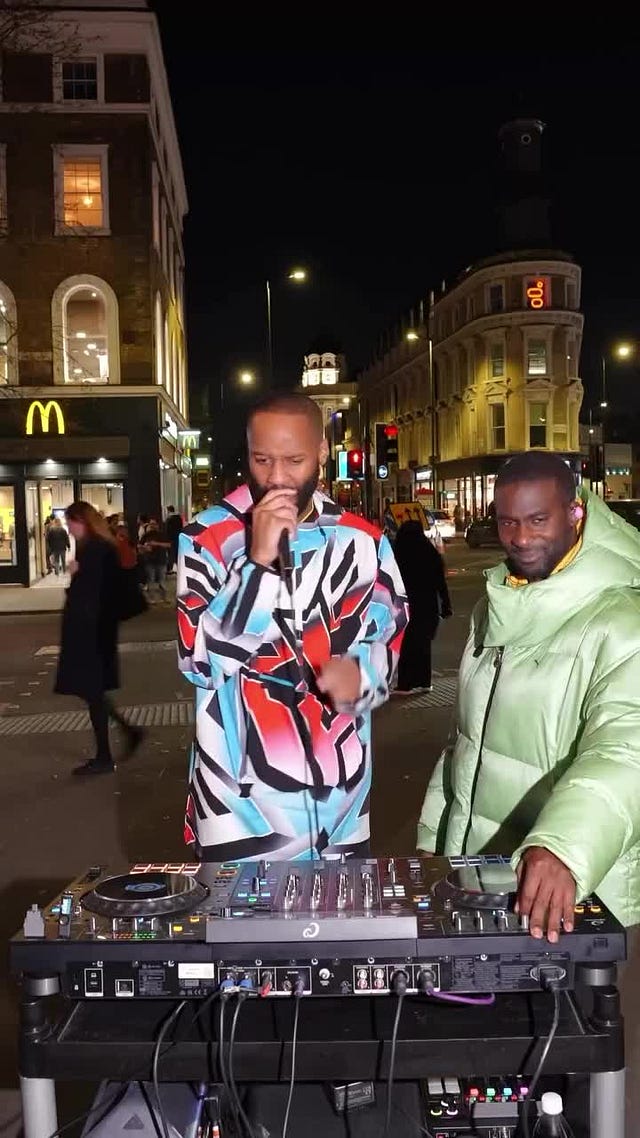
One evening last December, near the arches of King's Cross Station, a beat echoed off stone. A man stood behind a folding DJ table, his decks humming under battery-powered LEDs. An MC freestyled on the mic beneath the warm pulse of the golden arches. A small crowd lingered (commuters, teenagers, and delivery cyclists) drawn into an ephemeral moment of music. The DJ was Ashley "DJ AG" Gordon, a former sales manager from Tottenham, now one of London's most-watched livestream curators.
 Tiktok failed to load.
Enable 3rd party cookies or use another browser
What once might have been a passing encounter now travels across borders and time zones. DJ AG’s impromptu sessions, always filmed in public squares and posted online, routinely attract thousands of live viewers. He has become a figurehead in a global movement transforming street performance (once among the most analog of cultural forms) into a hybrid of stage and screen. His rise illustrates a broader phenomenon: the way digital systems now bind and broadcast urban culture in real time.
Street performance has merged with the digital layer: an invisible mesh of real-time data, livestream platforms, notifications, and algorithmic curation that overlays physical space. This layer does not just help us choose where to eat or how to navigate. It reshapes what we see, who gets seen, and how we experience the city itself. It both makes cities like London (once isolating and impersonal) feel more connected, and perversely, deepens isolation by substituting digital presence for human interaction.
Digital Amplification and Cultural Surface Area
In the past, a busker played to whoever walked by. In the present, they perform for an audience far beyond the square. TikTok, YouTube, and Twitch have recast the street performer as a globally accessible content node. The passerby is now incidental; the real crowd lives online. What matters is not where the performance happens, but how it is framed, clipped, captioned, and shared.
Ashley Gordon began setting up his decks in 2023 in London’s busiest zones. He brought with him not just speakers but a self-contained digital studio, including a 5G router, external batteries, QR-code signage, and livestream chat. What began as a solo act became a curated platform. It blurs the line between physical presence and networked performance. He passes the mic to unsigned MCs, blends grime with old-school hip-hop, and cuts highlight reels for social media. His sessions now attract over 6,000 live viewers, with TikTok followers exceeding 1.5 million.
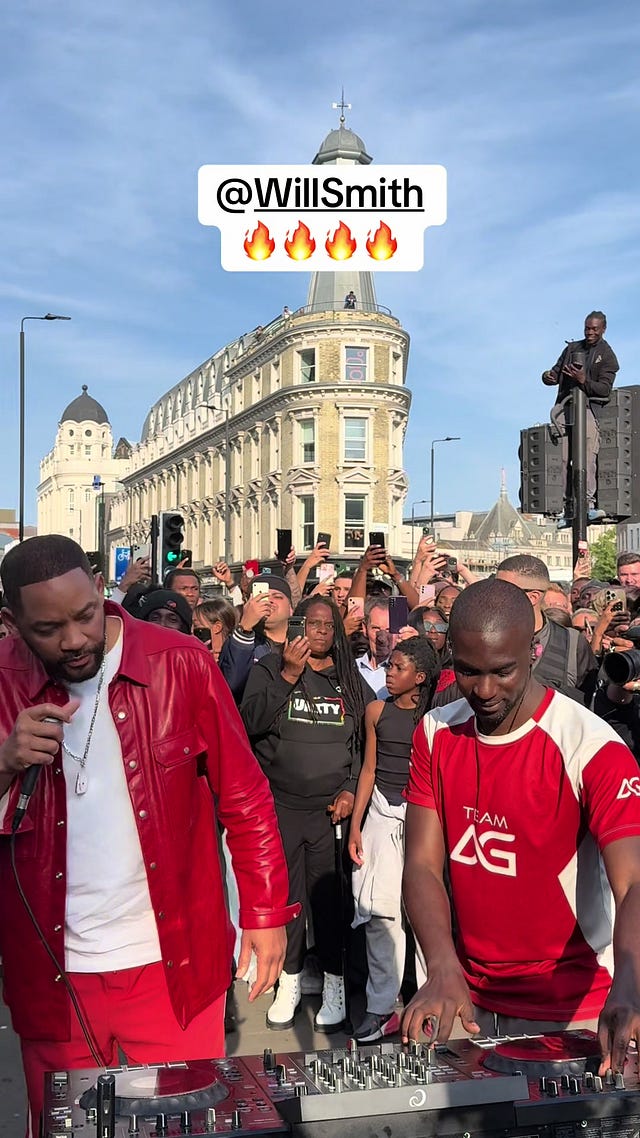
In 2025, he became a magnet for celebrity alignment. A well-timed appearance by Will Smith (remixing "Summertime") and a cameo by Rita Ora turned AG’s regular street setup into the stage for a publicity maneuver. Marketed as spontaneous, the event was unmistakably calculated. AG brought the street authenticity; Smith and Ora brought global brand power. Together, they engineered a moment that mimicked authenticity while delivering reach. It was not collaboration, it was co-optation.
 Tiktok failed to load.
Enable 3rd party cookies or use another browser
DJ AG was named Time Out's Londoner of the Year. His platform now funds studio time for emerging artists and supports community performances in youth clubs and care homes, reengineering how culture is distributed.
The Quiet Expansion of the Digital Busker
DJ AG is not alone. Across the UK and Europe, a cohort of musicians has followed the same path: from pavement to platform.
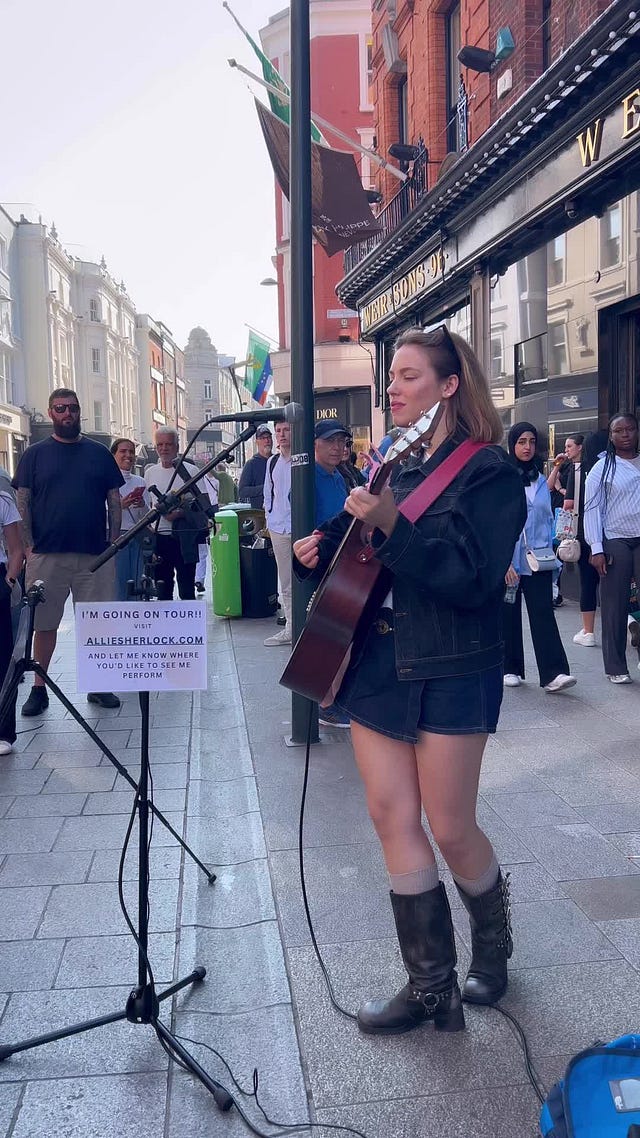
In Dublin, Allie Sherlock began as a schoolgirl with a loop pedal and a knack for Ed Sheeran covers. By the time she appeared on The Ellen DeGeneres Show at age 12, her videos had already begun to attract millions. Today, she boasts over 6 million YouTube subscribers. Her weekly uploads echo her street sets, preserving the immediacy of live performance while shaping it for the digital gaze. Her rise isn’t simply about vocal talent. It’s also about recognizing that the real-world crowd was only half the audience.
 Tiktok failed to load.
Enable 3rd party cookies or use another browser
Then there is Button the Busker, a one-man band whose rig fits in the back of a Honda Civic. With a guitar, harmonica, foot percussion, and LED-lit signs, he tours the U.S. East Coast and streams his sets to a growing online following. He is not famous by traditional standards, but that is precisely the point. The new model of success is less about celebrity and more about sustainability. Button earns a modest income (somewhere in the range of $18,000 to $24,000 a year), combining tips, merch, and livestream donations. It’s a living stitched together from tiny transactions, each one a vote of attention.
In Winchester, 19-year-old Emelie Hallett is part of a younger wave for whom busking and TikTok are inseparable. Her rise coincided with the COVID-19 lockdowns, when the hashtag #BuskTok surged past 300 million views. Her performances, shared on social media, allowed isolated viewers to tune in, react, and support her. Today, she speaks of the online busking community not as an audience, but as a mutual support network. It is a place where duets, collaborations, and kindness circulate in ways the street never allowed.
 Tiktok failed to load.
Enable 3rd party cookies or use another browser
What binds these performers is not geography but adaptability. They’ve internalized the demands of the digital layer: short-form cadence, visual clarity, direct audience engagement. They perform for the camera and for the crowd. They respond to emojis like applause. They split their acts into highlight packages, each one an audition for algorithmic relevance.
Belonging and Its Imitations
Less than a generation ago, cities like London could feel cold and isolating. The scale was thrilling, but impersonal. Now, the digital layer overlays the city with ambient connectivity: livestreams from buskers, pinned recommendations, and social cues embedded in the architecture of apps. You are never entirely alone, but never entirely together.
This illusion of intimacy carries a paradox. What seems like connectedness often serves as its substitute. We watch without engaging. We applaud without speaking. Livestreamed culture allows us to witness without being present. The street fills with sound, but the feedback comes in the form of hearts, not eye contact. What we gain in accessibility, we lose in reciprocity.
A Platform, Not a Place
The digital layer rewards immediacy and demands brevity. Performances are optimized for the scroll, not for stillness. A QR code now replaces the guitar case. A comment replaces a conversation. Visibility has been democratized, but at the cost of context.
And yet, the transformation is not without merit. DJ AG doesn’t need a club residency. Sherlock doesn’t need a label. Hallett didn’t wait for industry approval. The tools of distribution are now widely available, and the street, once seen as marginal, is increasingly central.
This shift has created a new kind of cultural worker. Performers now double as editors, lighting designers, and social media strategists. Button the Busker builds his livelihood transaction by transaction. Sherlock maintains an empire from a public sidewalk. AG likely earns more from merchandise and tips than many touring DJs.
But the costs are real. The pace is relentless. Copyright claims, platform volatility, and harassment: they all chip away at the joy of public expression. Still, most continue, not because they chase celebrity, but because they crave connection. This is true even if that connection is mediated, deferred, or flattened.
The Accidental, Engineered
Busking once belonged to the incidental. You stumbled upon it. It rewarded those who lingered. Now, it is foregrounded by algorithms and fed to audiences on demand. The same system that recommends a sandwich now suggests a saxophone solo.
This shift is not unique to music. Writers have become newsletter publishers. Comedians are TikTokers. DJs are livestreamers.
DJ AG is not nostalgic; he is adaptive. He bends the tools of platform culture toward community. He performs with the digital layer, not in spite of it. In doing so, he reveals both the promise and the compromise of this new visibility economy.
A City of Signals
The digital layer has not killed spontaneity; it has reformatted it. The fleeting encounter is now clipped, captioned, and cached. The crowd is still there, but it scrolls.
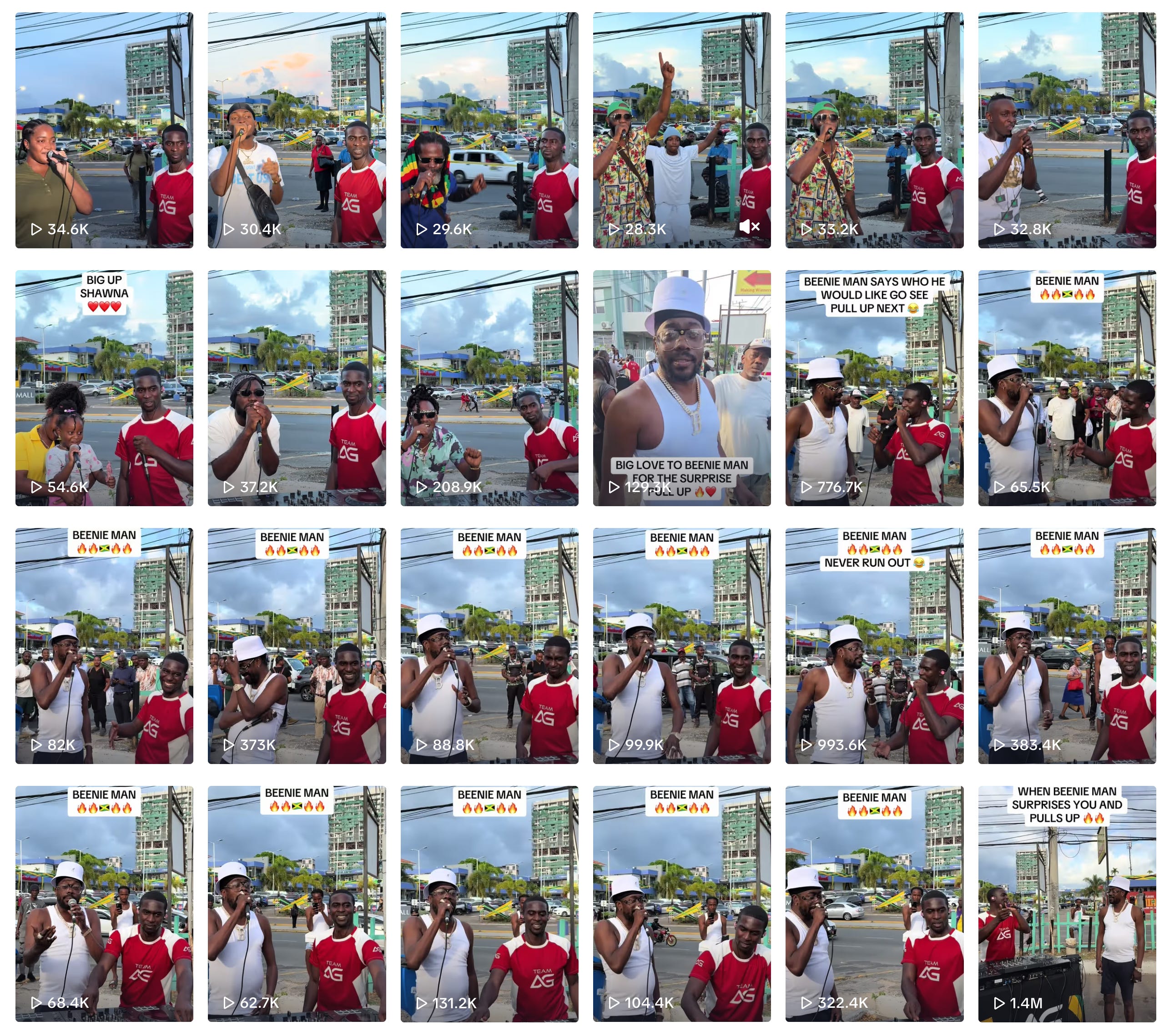
And yet, even abstracted, this system carries meaning. Street performers like DJ AG, Sherlock, Hallett, and Button transmit culture not just from city to city, but from person to person, across interfaces and time zones.
They are not simply entertainers, yhey are ambient presences, urban signals pulsing through systems of attention and desire. They remind us that even in curated isolation, we are still watching each other, still seeking something that feels like presence.
You just have to scroll to find it.
The Algorithm Walks Among Us
This is the Third in a series unpacking the digital layer; the invisible systems that guide our everyday choices. New essays drop regularly, covering everything from tourism and migration to memory, meaning, and metadata.
Previously


About the Author
Morgan Sowden is a London-based technology executive, writer, and entrepreneur with over 25 years of experience building digital platforms across media, fintech, and marketplaces. A former senior engineering leader at Meta and ex-CTO at several high-growth companies, Morgan has spent his career at the intersection of technology and society, from building public internet infrastructure during the Bosnian war to co-founding a global platform for freelance journalists. He still loves techno, and when not thinking about algorithms, he’s usually traveling, taking photos, or quietly watching how technology reshapes the texture of everyday life. He lives in London.
Below is a longer essay exploring this topic.
The Digital Layer: How Invisible Systems Shape Our Choices, Behaviors, and Realities

The Digital Layer: A Second Skin on Reality